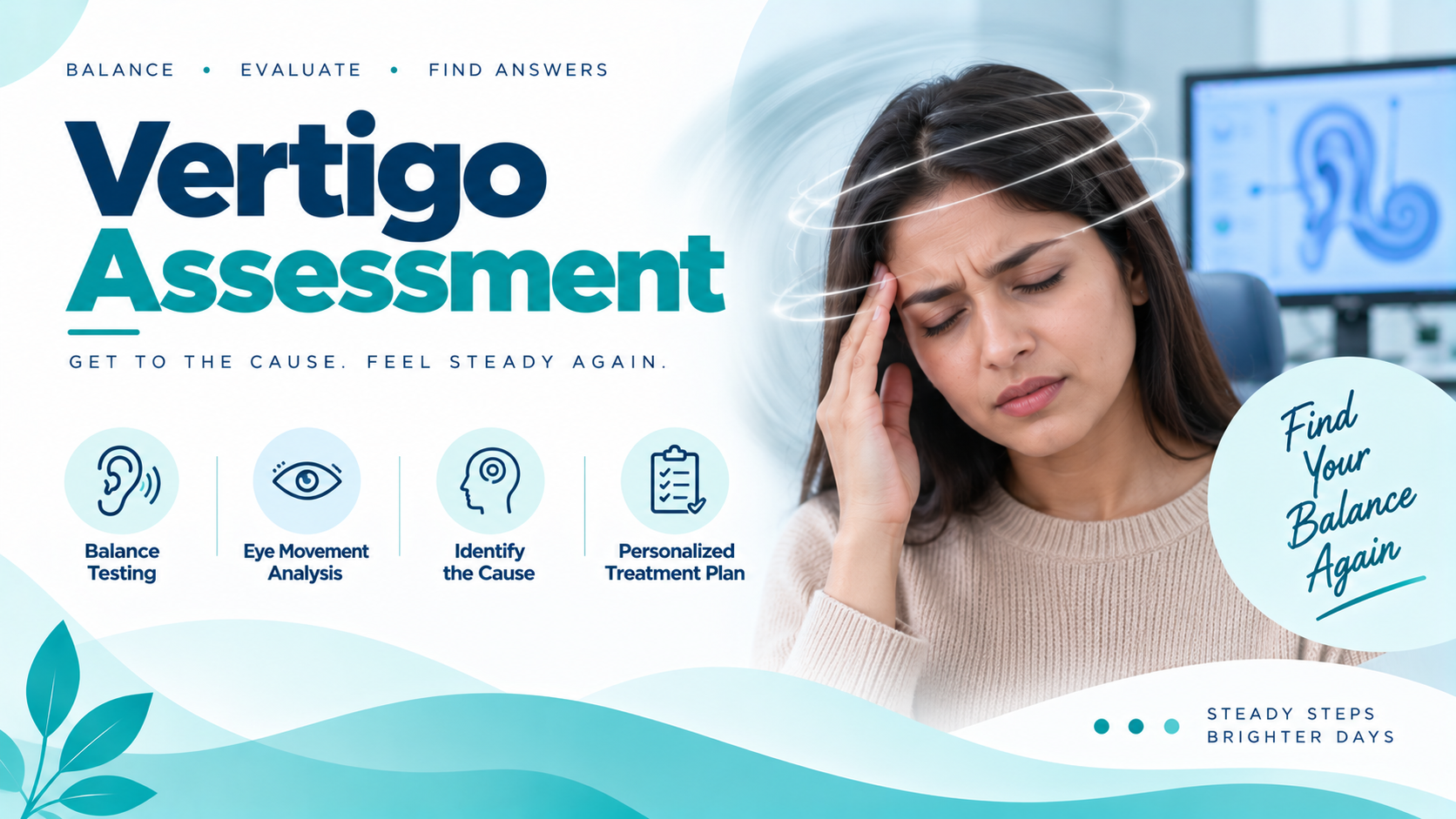
Vertigo is a sensation that you or your surroundings are spinning, moving, or losing balance. It can occur suddenly or repeatedly and may be associated with nausea, dizziness, unsteadiness, or difficulty walking. Since vertigo can have different causes, a proper vertigo assessment is important for identifying the underlying problem and planning appropriate treatment.
At Mahanandan Super Speciality Hospital, Greater Noida, Dr. Ashwani Kumar, ENT specialist, provides evaluation for patients experiencing vertigo, dizziness, balance problems, and related ear symptoms.
What Causes Vertigo?
Vertigo may originate from problems affecting the inner ear and balance system, although certain neurological and other medical conditions can also cause dizziness.
Common causes of vertigo include:
- Benign Paroxysmal Positional Vertigo (BPPV)
- Inner-ear disorders
- Vestibular neuritis
- Labyrinthitis
- Ménière's disease
- Balance disorders
- Certain migraine-related conditions
Identifying the pattern and possible cause of vertigo is an important part of the assessment.
Symptoms Of Vertigo
Vertigo can present differently from person to person. Common symptoms include:
- Spinning or rotating sensation
- Feeling unsteady or off-balance
- Nausea or vomiting
- Difficulty walking
- Light-headedness or dizziness
- Ringing in the ears
- Hearing changes
- Symptoms triggered by turning or moving the head
Recurring or unexplained vertigo should be evaluated by a qualified specialist.
What Happens During A Vertigo Assessment?
A vertigo assessment begins with a detailed discussion of symptoms, including when the dizziness started, how long episodes last, what triggers them, and whether hearing changes or other symptoms occur.
Dr. Ashwani Kumar may perform an ENT and balance-related examination based on the patient's symptoms. Additional hearing or vestibular tests may be recommended when required to assess the functioning of the inner ear and balance system.
The findings help determine whether the symptoms may be related to an inner-ear condition or whether further medical evaluation is necessary.
Why Early Evaluation Matters
Repeated vertigo can interfere with work, daily activities, mobility, and overall quality of life. In some cases, dizziness may also increase the risk of falls and injuries.
A timely assessment can help identify the possible cause and allow appropriate management to begin. Treatment depends on the underlying condition and may include specific exercises, medicines, repositioning procedures, lifestyle guidance, or referral for further evaluation when appropriate.
Vertigo Assessment In Greater Noida
Dr. Ashwani Kumar at Mahanandan Super Speciality Hospital, Greater Noida, provides personalized ENT evaluation for patients experiencing vertigo and balance-related concerns. A detailed assessment helps understand the symptoms and determine the most appropriate next steps.
If you experience recurrent spinning sensations, dizziness, balance problems, or vertigo associated with hearing changes or ringing in the ears, consider consulting an ENT specialist.
For vertigo assessment and balance-related ENT care in Greater Noida, consult Dr. Ashwani Kumar at Mahanandan Super Speciality Hospital for expert evaluation and personalized guidance.